Thursday, November 24, 2016

Cultural Experiences


Some random cultural experiences from the jungles of Peru:
A couple of weeks ago we decided to grow plantains at the farm. It is not to difficult but it requires starts. For those of you who, like myself,  know nothing about plantains, they don’t grow from seeds but rather the starts from an existing plant. The majority of healthy plantain plants have numerous starts growing around them so getting started is not difficult. All we had to do was find someone who had plantains, ask for starts, and then dig them up. They look like this:
We had been out to a community to church and began asking around and soon we found someone who had plenty of starts and had a field only five minutes from the road. I told him I would be there the next morning and he said he would be there too. So early the next morning the guys that work at the farm and I loaded up and headed for the village. When arrived he was not home. We explained the situation to his wife and asked where their plantain field was located. She responded “por el central.” Which means in the center, away from the road or deep in the jungle and possibly an hour our two walk from the road.
I feel then need at this point to explain the time anomaly of jungle life. For the native people time means little and distance means absolutely nothing. They don’t have a concept of miles or kilometers so when I ask them how far away something is they always respond in time. For example, when I ask how far away is your village they respond 6 hours in boat. But the problem is no one owns a watch so no one actually know how long it takes to go anywhere. And since they don’t own a watch they don’t really understand how long is a minute or hour. As a result, if they say it is an hour walk that could mean 1 hour or 3 hours, no one knows, and if you ask someone else they may say 2 hours. It also depends a lot on who is walking because somehow the barefoot short legged natives walk twice as fast as me.
So when the guy told us it is a five minute walk it could actually be an hour. Who knows? We gave up on him and headed to another person’s house that we know has plantains. We had to cross a river to get there. I had crossed the river in this spot before and there has always been a dug out canoe. But this time the canoe was MIA which only leaves one other option. Praise God the river was low and only chest deep so we took off our pants and walked across the river holding our stuff above our head to keep it dry. Finally, we reached the house and of course he was not home. But his wife told us where the field was and to help ourselves to the starts. The problem was her directions to the field where a little shaky. She said, “go to so-and-so’s house then take a left then a right.” I had no idea what this meant but one of the guys with us is Shawi and knew where so-and-so lived so off we went. The guy leading the way went first and for some reason decided to walk twice as fast as everyone else(because he's Shawi). Soon we came to a fork in the path and our leader was no where in sight. So we do what everyone does in the jungle when they are looking for someone, yell real loud. But he did not respond, so we yelled and whistled and yelled some more and finally we just had to decide which path we thought looked the best to walk down and at that point I was sure we were lost. But we walked for a little bit and came to a plantain field and there was our leader standing there. I asked if he heard us and he didn’t respond, but just stared at the ground. Why? I don’t know. I can’t figure the culture out sometimes. Many times when I ask a question to a Shawi they just look at the ground and ignore me. That means either they don’t know the answer or they don’t understand my Spanish or they don’t want to answer. Either way it is frustrating.
We spent the rest of the morning digging and cleaning the starts and hauling them back across the river half naked to the furgon. The worst part was that we needed 300 starts and we only had 166.

We really haven’t landed on a home church yet. We have lived here a little over three months and in that time we have visited 6 churches. It is hard to have a home church because we are always getting invited to visit other churches. It is part of our life here. And it is not just simply visiting, every time we visit a church we are asked to stand up and say something or to preach.  The churches in town are more formal and will often ask in advance for me to preach (although sometimes only ten minutes in advance), but when we visit a church in the native communities it is just assumed that I will preach because I am the visitor. Many of the churches here in town have very loud music and most have service at 8:00pm Saturday or Sunday night that often go till 10:00pm. It is so hard to go to a church that blows your ear drums and doesn’t start till after our kid’s bedtimes. So we’ve been looking for a good church and the other night decided to visit a new church that one of our friends, who works here at the Hogar, attends. It starts at 7:30pm so we already liked it before we walked in the door. It was a quiet little church on a dirt road with about 30 people. When we go to church we stick out a little bit. First we are tall and very white, second we have blue eyed blond haired children, and third we always have a few extra people with us. Typically, we bring some extra moms, kids, or babies from the Hogar. So when we walked into church they had to scramble to find enough seats as we took up about a third of the church. Right away they asked me to stand up and introduce everyone and explain why we were there. They asked us some questions but where very friendly and accommodating.  We sang some beautiful hymns with an acoustic guitar and hymnals and we really enjoyed some quiet intimate worship time. Then the preacher gave a short and precise message from the word of God. We sang a closing hymn and finished at 8:30pm. Even with the visiting afterword we were still home by 9:00pm. The kids enjoyed it as well. We may have found a home church.

Last weekend I had big plans, but they fell through. There are some communities I have been trying to visit on the Cachiyacu River. Normally it is 6-8 hours in boat to reach them but there is a new road being constructed to the capital of the district Balsapuerto. From Balsapuerto it is half an hour walk to one community and hour and a half to the other (that is jungle time so who really knows?) As a result, I decided it would be easier to go by road and save 4 hours of travel time. The road was supposed to open the 15th of November so I planned a trip last weekend with Davidcen who works at the farm. We planned on meeting with some of the believers that have cacao to check on their progress and attend church Sunday morning to encourage the believers. When we got to the new road, which is two hours from Yurimaguas, we were met with a large wooden gate across the road. We asked the workers and they told us that the road is finished but has not opened because they are waiting for the regional governor to come, inspect, and inaugurate the road. That was supposed to happen last week but the governor has not made it out yet.
Changing our plans, we decided to meet with some of the guys in that area that have cacao. We stopped at the community of Nueva Yurimaguas to talk with Pastor Orlando. He has about 2 ½ acres of cacao and it is producing well accept some of the pods have spots on them. I said, “can we look at it and where is your field?” “Oh, about half an hour walk,” he said. You know what that means, an hour later we arrived at his field. 

We sat in the field and discussed his cacao while eating the pulp from the cacao pods (photo above) and then prayed together. When we returned to his house his wife had prepared lunch. She had killed a chicken to make chicken soup. Killing the chicken for us is like killing the fatted calf. And one of the men with us, Pastor Roque, made the most of it. I watched him eat two bowls of soup, 6 boiled plantains, and a chicken leg, bone and all! It was a first for me watching someone eat bones but he is good humored so when I razzed him about it he told me the bones are the best part of the chicken and that I am missing out. It still wasn’t enough for me to try it.
The next day we headed back out to the same area for church. We visited the church in Segundo Jerusalem. It is a small community of believers that still don’t have their own church building but they are in the process of building one. They will spend four of five days cutting and milling all the wood with a chainsaw to build the structure. Then they will install a metal roof for protection from the rain and sun. It doesn't sound like much but it will be one of the nicest buildings in the community. We wanted to visit them and encourage them in their building project. They of course asked me to say a few words and to pray for the service. They also asked me to sing which I did not understand completely so I agreed to it until Jennifer stepped in and explained to me what was happening, so then I politely declined. It was a great time in the community as they were so open and friendly with us. We stayed and visited after church while drinking chicha with the believers and asking each other questions. They even taught us some Shawi words. I think they really enjoyed laughing at us as we tried to pronounce them correctly.
They were having a soccer game in the afternoon and invited us to stay and play but we declined as we had to go back to Nueva Yurimaguas and find Pastor Roque and take him back with us to Yurimaguas. When we got to Nueva Yurimaguas they somehow knew that there was a soccer game in Segundo Jerusalem and next thing I know we had 16 people in the back of the furgon headed back Segundo Jerusalem. That beats our previous record of 12 people. 
By the time we finally had the furgon headed back to Yurimaguas we had 11 people and a pile of plantains, yuca, corn, and pineapple that were donated by the believers for the Hogar. What a great day it was of worship and fellowship with our Shawi brothers and sisters!

Thursday, November 17, 2016

A Trip to the Market

Just for something fun and different we decided to to a video post this week. Here is a video of our trip to the market. It is where we shop and get the majority of our food here. This market is called the Bado and it is right outside our house seven days a week from 3:00pm to about 7:00pm. It is right beside the Paranapura River so it is easy access for those bringing products from their communities to sell in the city. Sorry for abrupt ending, ran out of space on the phone. 
A little slice of Yurimaguas life for your viewing pleasure. Enjoy!

Tuesday, November 1, 2016

We do not lose hope


I sat in church all alone thinking about the difficulties of life here. Not just problems like cold showers, no toilet seats and having parasites but more the emotional strain.  My family was in church too, but just not sitting with me, we couldn’t find seats together. The church was full because today was the church anniversary. A day full of special songs, guest preachers, and celebration. I didn’t feel like celebrating. All I could think about was 2 Corinthians chapter 4. In July of 2015 we lived in North Carolina for a month for cross-cultural training. One of the teachers made us memorize the first 12 verses of this chapter and it was suddenly flooding back into my brain. “Therefore, since through God’s mercy we have this ministry, we do not lose hope.” This is so true. We serve in a ministry that without God is hopeless. Two rows in front of me sat Jennifer with Henry and two other children from the Hogar. Their mother and father are both in prison. The boy just turned four and the first three years of his life he lived with his mother in prison. To this day he is more comfortable in prison than out. We know this because Jennifer takes them twice a month to visit their mom. Their mom will be in prison for two more years. The girl is eight and has problems with authority and trust issues. 

Lucy is sitting in the back of the church with the Shawi women. On one side is her new best friend, a 14-year old with a baby who ran away from home. We have written about her in the past and if you have not read Jennifer’s post, Pray for Esther, please do. On the other side of her is a family member of a man that just had his leg amputated. He had a tumor the size of a volleyball. He is recuperating but will someday return to his village. It is a 12-hour boat ride from Yurimaguas. His future is uncertain as the only thing he has done in his life is work in his fields to provide food for his family. Now, without the leg, that becomes next to impossible.

Maggie is in the front of the church with one of Susan’s girls. She was abandoned at birth and lived her first 11 years at the Hogar before being adopted by Susan. She is sweet and loves Maggie but struggles in school and has abandonment issues.
Finally, someone comes to sit by me. It is one of Susan’s boys. He was born with a cleft pallet and almost died of malnutrition. Now at 14 he is healthy but talks with a lisp and has a scar on his face from the surgeries. He also has a scar in his heart as he struggles with anger. He is mad at the world and who would blame him.
On stage the administrator at the Hogar is singing a special.  She has a beautiful voice but her life is full of pain as well. She has a host of personal issues that many are out of her control. Despite this she pours out her heart to God trusting in Him above all else.
Every day new people walk into the Hogar and into our lives. Every single person has a story and most are of brokenness. Broken homes. Broken relationships. Broken bodies. Broken lives. Right now we have a lot of court cases here at the Hogar. A family of six siblings under 12 removed from their home. A 13-year old is here because her mom was beating her. Another 13-year old that is pregnant. We have a 9 month old with a cleft pallet due to have surgery next month and his mom has abandoned him twice. And the list goes on…
The Hogar Materno is not a children’s home or an orphanage. It was designed to help on a temporary basis. We have 5 dedicated staff members that cook and clean, three full-time and two part-time. Here mothers, high risk pregnant women and malnourished children can get a clean bed and three healthy meals a day.  We are not capable of having a family of 6 children here. We don’t have the staff to care for them. 

It is easy to loose hope here. Everyday my heart is broken. Everywhere I look I see injustice and pain. I often cry.
The child we brought back from the jungle two weeks ago has fluid on the brain. His mom has refused the surgery and they are back in their village. I am perplexed.
Again I run 2 Corinthians 4 through my head. “We are hard pressed on every side, but not crushed; perplexed but not in despair; persecuted, but not abandoned; struck down, but not destroyed.” To a non Christian this is nonsense, but to us it makes perfect sense. Our hope is not in this life. This life is temporary and will soon end for every one of us. So to face adversity, difficulties and trials is not devastating to us. In fact, it is expected. Since our hope is not in this life when we are hard pressed we are not crushed, and when perplexed we are not in despair. Our hope is in the eternal and NOTHING can take that away from us. And that is our message here at the Hogar. Everyday we have the opportunity to share this hope, the greatest gift of all time.
I am not alone in church. God is there too, confirming that, even though He has called us to something so difficult, He provides the strength and hope we need to get through the day.
“For what we preach is not ourselves, but Jesus Christ as Lord, and ourselves as your servants for Jesus’ sake. For God, who said “Let light shine out of darkness,” made his light shine in our hearts to give us the light of the knowledge of God’s glory displayed in the face of Christ.”

Monday, October 17, 2016

The Long Weekend


My weekend began at 4:00am Saturday morning. A fellow missionary here in Yurimaguas has started a Bible institute that meets every other Saturday.  The institute is located in a town called Santiago De Borja. The town is accessible by road but the travel is complicated. We left early to go to the taxi company on the other side of town. We then caught a taxi to Pongo, a town an hour and half away. From there we waited by the side of the road for a pickup carrying cargo to Santiago De Borja, basically it is hitch hiking. We had to go early because the road is under construction and closes at 7:00 am. It then is open for an hour at a time at 10:30, 12:30, and 2:30. We climbed into the back of a pickup and headed down the jungle road for another hour, through the early morning mist. It was a cold ride, but beautiful passing rivers and mountains and through fields and towns. 

We arrived in town about 7:30 and ate breakfast at a local restaurant (tables in front of someone’s house). The house next door had this cow looking for breakfast.

The institute started around 9:00 and went till 1:30. Twenty eager believers gathered together to study about prayer. 

My companion is a gifted teacher and maintained their attention the whole time. At 1:30 we left to return to Yurimaguas with a donation of plantains. The road wasn’t open and we had to wait for a while to pass through. Once through we again attempted to hitch a ride from Pongo back to Yurimaguas, but none were available. After an hour and half in the hot sun we finally found a pick up with seats in the cab, a gift from God. We returned to Yurimaguas about 5:30. After a shower and supper we were back in a local church by 7:30 to preach. I preached about the great commission and how we are all called to be missionaries. After service we talked with fellow believers and finally I returned home by 10:30, exhausted. 

But at 6:00am Sunday I was back up, loading the family in the furgon. This week there is a pastor’s conference here in Yurimaguas. Shawi pastors come to town for the week to study the word of God and they need to eat. At the farm we had some goats but they don’t like our fences and when we planted the yuca they enjoyed eating it. As a result, we hauled them to a Shawi village called Nueva Yurimaguas. The goal Sunday was to head to the village to get a goat and butcher it for the pastor’s conference. But God had other plans. First we went to the farm to pick up one of the workers, Devincen and his family. Then we drove another hour down bumpy rutted dirt roads to Nueva Yurimaguas in time for church at 9:00am. To get to the village we had to cross the Aramanyacu river. 
The kids loved the little raft which was nothing more than four logs tied together. After greeting everyone we sat down on wood benches on the dirt floor. The church has no walls but it does have a roof to keep the sun and rain off. 

When it came time for the message the pastor got up and in front of the whole church asked if I would preach. Luckily I was ready from the night before and preached a similar message. After church we enjoyed the fellowship at the pastor's house.
 Maggie enjoyed talking on her watermelon phone.
A woman approached Jennifer with a new born baby. The baby was only four days old and not eating. As Jennifer held the baby he went into convulsions and we knew this was an urgent situation. We talked them into coming with us to Yurimaguas and to the hospital.  The problem is the mother is mute so the grandma was coming to talk for her, but the grandma only speaks Shawi. I don’t know how it happened but soon we were headed back to Yurimaguas with fifteen people in the furgon, our family, Devincen and his family, three Shawi woman, three Shawi babies, and no goat.

Our intent was only to get a goat but God had other plans, we were able to share His word and save a baby’s life! He can change my plans anytime. But this was only the beginning for Jennifer. After returning to the Hogar we sent Jesusa, the woman on duty at the Hogar, to the hospital with the Shawi women because she speaks Shawi. That left us alone at the Hogar. Jennifer cooked supper for 15+ people, bathed the kids, cleaned, dispersed meds and more. When Jesusa returned from the hospital they still had not admitted the baby so Jennifer went to the hospital. The health care here is rough even if you speak Spanish and worse for minorities like the Shawi. The hospital wanted to take the babies temperature but that requires a thermometer and of course they don’t supply that. So Jennifer had to go to the hospital pharmacy to buy a thermometer, but they were out of thermometers. So she asked the guard where to buy one and he said, “it is Sunday night, there are no pharmacies open, but there is one on the other side of town where the owners live beside the store and if you bang on their door they can open up and help you.” That is healthcare in Yurimaguas.

The poor Shawi women were in culture shock. Jennifer had to teach them how to turn on a faucet because they had never seen one. And to translate she called Jesusa and handed the phone to them, but they had no idea what to do with a cellphone. 

The baby had bruises on his belly and through translation we found out that they had taken the baby to a local witch doctor. The witch doctor said the baby was cursed and had a bad spirit. He tried to remove it by sucking it out his stomach, hence the bruises. 

The baby does not have a government ID to receive free health care so Jennifer had to pay for him, it cost $2.50.  Finally, they admitted the baby and Jennifer returned home around 11:00pm. And that was our weekend. We had trouble getting out of bed Monday morning, but there still is a goat to butcher and he is two hours away and across a river. 

Please pray today for this baby in the hospital and for the Shawi people. Please pray for the pastor’s conference this week. These men are being trained to bring light and truth to the dark corners of the jungle. They are workers being sent out into the harvest.

Jesus went through all the towns and villages, teaching in their synagogues, proclaiming the good news of the kingdom and healing every disease and sickness. When he saw the crowds, he had compassion on them, because they were harassed and helpless, like sheep without a shepherd. Then he said to his disciples, “The harvest is plentiful but the workers are few. Ask the Lord of the harvest, therefore, to send out workers into his harvest fields.”
Matthew 9:35-38

Sunday, October 9, 2016

Yurimaguas life


Just a quick update on life in Yurimguas for the Hires.  A couple of weeks ago a Darin Schrock came from the states to visit. What a blessing he was to us. He spent a week with us and it was so encouraging to spend time with an old friend. We welcomed him by taking him to the market his first day to try some local cuisine. Here is a picture of him eating grilled suri, a large grub and local delicacy.


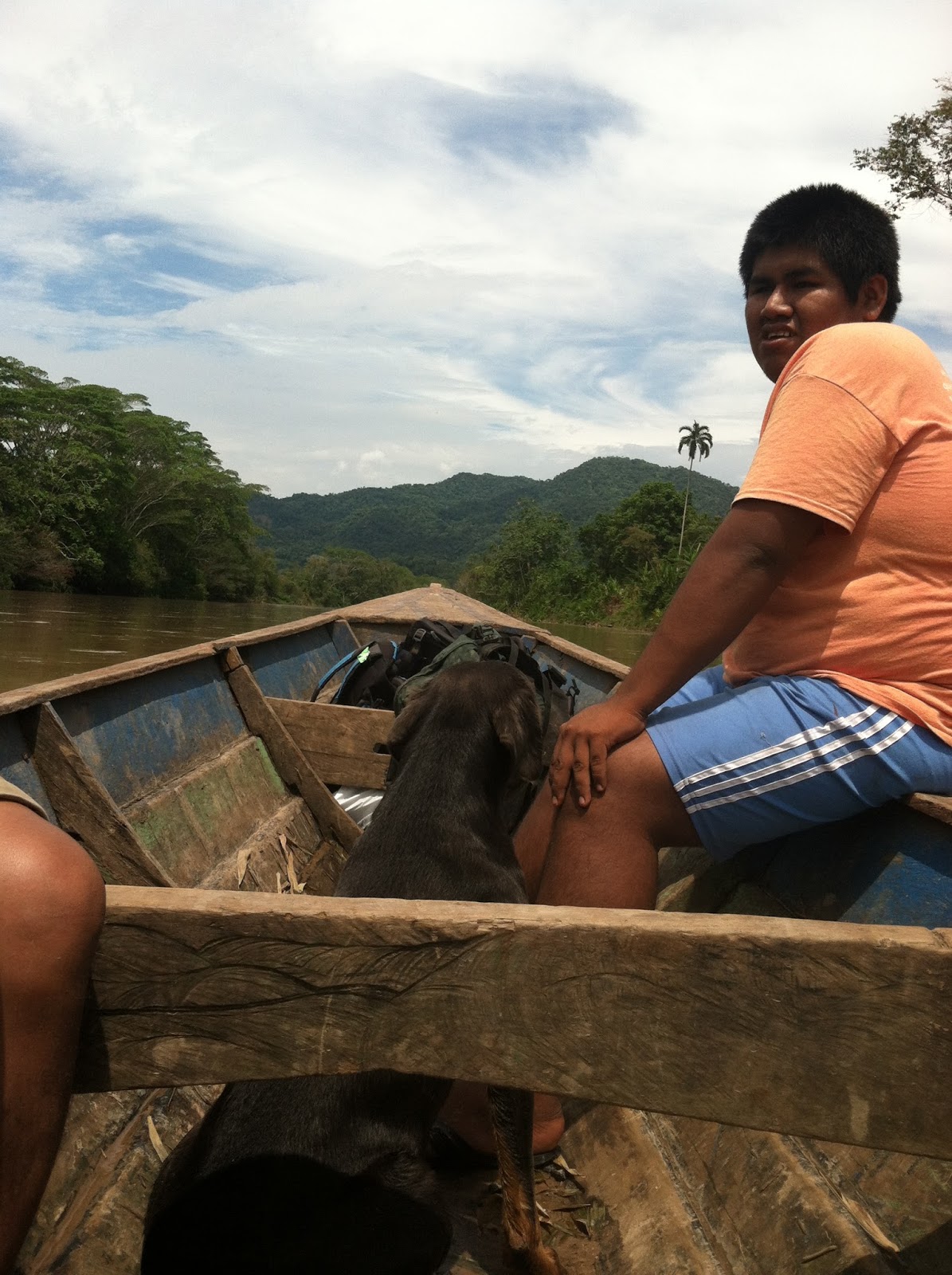
Then we went upriver to visit a Shawi community. To get to the community we had to travel two hours in a leaking boat with a dog and walk two hours through the steaming jungle. We went with another missionary to determine how to meet the need for fresh water in the community during the dry season as well as to give some bibles to new believers.


Maggie turned one and we had a nice party here at the Hogar. With all the mothers and children as well as other missionaries from here in town we had over 30 people at the party.  She really enjoyed her cake and some gifts from back home that Darin brought with him.


Our new furgon has been a great family vehicle. We have used it to haul many different things including people. Here we are hauling 12 people with room to spare.


We added a roof to protect us from the rain and sun and it has been a nice addition. One day last week we were told at 6:30 in the morning to leave the Hogar for fumigation. Sometimes the government fumigates the whole town house by house to get rid of the mosquitoes and stop the spread of diseases associated with the mosquitoes. The fumigation is terribly toxic and we have to leave the house for an hour and a half. It wasn't a great way to start the day but we tried to make the most of it. We bought breakfast and drove out to the bridge on the Paranapura river to eat. Thanks to the roof we were protected from the sun while we enjoyed the view. 


We are working hard to move into our own place. We are going to live in the upstairs of a house owned by the mission and located here at the Hogar. It has plenty of space but lacks a kitchen. As a result we have built a temporary kitchen sink to create a kitchen in the laundry area. It is not ideal but we are excited to finally have our own space to unpack after 9 weeks of living out of our suitcases.


Maggie has even found her own space in the new place.


Yesterday we took a break from moving to celebrate Lucy's birthday. We found a fancy hotel here in town that has a movie theater in the basement and a swimming pool. We rented the whole theater and invited some friends to watch Frozen with us. We tried to watch it but it was a bad copy and skipped and froze. Then we switched to the new jungle book movie. It took us 20 minutes to get the theater operator to switch the movie and then the movie started in the middle. We asked to started in from the beginning so he restarted it and somehow it started in the middle again so he just rewound the whole movie on slow, second by second we watch the movie in reverse. Finally the movie started from the beginning but it was so quiet we couldn't hear and had to find him again to turn it up. I was frustrated but Jennifer just laughed and said "welcome to the movies in Yurimaguas." After the movie we went swimming but after an hour we were kicked out because they were fumigating the hotel. The movie and swimming for 7 people and 18 bags of popcorn cost us $28 so I guess I can't complain.
Overall we are doing well. We are struggling to set up a house in a foreign country and find a routine for our family as well as meeting the ministry needs here. But each day is a walk of faith and we can only rely on God. We desperately need him everyday to not only survive but to thrive here in the jungle.


Saturday, September 17, 2016

The hardest thing I have ever done


Just thought I would take a minute to describe some of my work this week. Part of our mission is a farm about 45 minutes from Yurimaguas. The goal of the farm is three fold, support the Shawi with agriculture development, support the Hogar with food, and disciple and train men of God in the process. This week the focus was on food for the Hogar. At the Hogar we eat a lot of yuca. For those of you not familiar with yuca (just like me a week ago) it is a miracle food in the jungle. Grows well in heat, can take a lot of rain or drought, can store in the ground for three to six months, pest resistant and high in calories. It might be the perfect food for the jungle (God's kind of amazing like that). So we decided to grow yuca at the farm.
We began by clearing an area for the yuca and then we needed to plant some yuca. To do that we had to make a trip to a Shawi community to get some yuca starts. On Tuesday morning two of the workers at the farm and I loaded up in the new furgon and headed out to a village called Segunda Jerusalem.
About an hour and half from Yurimaguas we stopped along the side of the road took off on a foot path through the jungle. I realized that my companions were wearing sandals and thought it strange to wear sandals in the jungle until we had walked about 200 yards and came to a river. 


There was a dugout canoe tied up on the bank but as it is the dry season now it became obvious that it was easier to walk across the knee deep water, hence the sandals. They had to wait for me to take off my boots and socks and then wait some more for me to put them back on on the other side of the river. I felt I really didn’t have a clue what I was doing but that was only the beginning.

We walked past some houses through a papaya field and a pasture and back into the jungle for a while till we came to a little clearing. 
There in the clearing was a small elevated house. One of my companions said, “there are dogs,” as he reached for a large stick. The other ran for a tree and prepared to climb. I decided it would be smart to follow suit and ran to a tree as well. We yelled at the house but no one answered. So my companion just held the dogs at bay with the large stick while I was trying to decide how to climb the tree. After a few minutes a Shawi woman appeared from the jungle with a large basket of produce. She called off the dogs and went directly into the house. She didn’t speak much Spanish but one of the guys I was with spoke Shawi. They talked for a few minutes and he apparently explained that we had spoke with her husband the day before and he said we could have some yuca starts. Her husband was away at the moment but would return later she said. She invited us up into her house where we sat on the floor while she served us a large bowl of chapu one by one because she only had one bowl and she waited till one person finished until taking the bowl and refilling it. It is custom for the Shawi to always serve a drink when a guest comes and it is never water. Chapu is a drink usually made of over ripe plantains and it is thick and sweet so I was looking forward to my turn. But I was surprised when she handed me a large bowl full to the top of red juice with white stuff floating in it. It was not what I had anticipated and it smelled terrible. But at this point I had no choice. Culturally the worst thing I could do was decline the drink. They only offer you their best stuff and to turn it down is very offensive. It could end a relationship and they might never talk to me again. So I tipped up the bowl and took a drink and it was as terrible as I thought. The first sip hit my stomach like a ton of bricks and I had an instant stomach ache. Despite my desire to gag I tipped the bowl again while everyone watched and downed the whole thing. It might have been one of the hardest things I’ve ever done.
After the drink we all grabbed machetes and followed her out into the jungle. 
We walked for quite a while through corn fields and plantain fields and patches of jungle till we came to her yuca field. Yuca grows like a tall skinny tree about nine-foot-high and what we needed was the trunk, called yuca poles. We cut the trunk off at the ground and trimmed the branches until we had a pile of nice straight poles. While we were doing this the woman cut some plantains from a nearby field and piled them beside our poles.  It was explained to me that this family was Christian and as they don’t have much money they often tithe in food. The plantains were her tithe to us to use at the Hogar to feed the woman and children. What a blessing!
After we had collected the poles it was time to harvest the yuca. Yuca grows in tubers underground and can be as much as two feet long. In this field there were old trees still growing so we had to harvest the yuca by carefully cutting out from among the roots of the trees. It was painstakingly slow and difficult. As the hours wore on and the jungle sun baked us I realized this might have been one of the hardest things I have ever done. 

Finally, we finished and had three piles; plantains, poles and yuca. I asked what are we doing with the yuca, hauling it to her house? “Oh no,” the guys replied, “she is giving us the yuca too.” It was then I realized we were at least a mile walk from the road and we had to cross a river with many heavy loads. My day was only beginning.
On the first load out the lady stopped me at her house and offered me another drink of chapu. At this point I was so hot and thirst that it actually did not taste that bad, I only gagged slightly. Trip after trip we carried poles, then plantains, then yuca. Finally, on one of the trips we passed the man returning home. He insisted we stop at the house for more chapu and a chat. By the third bowl I think I was growing accustom to the taste. Then he served us lunch. A steaming bowl of fish soup, made with dried piranha with a side of yuca and plantains. Luckily I sat at the edge of the house so I could sneak bites to the dog sitting below me. I think now I am his best friend. Also they had pet parakeets that ate the yuca off my plate, I didn’t stop them. 


After lunch the man offered to help us carry the rest. He easily carried twice what I could, barefoot, and twice as fast. On our last trip out we stopped by another neighbor’s house where of course we had to drink some more stuff. This time it was yuca based but just as terrible. When we arrived back at the furgon we found lemons and more plantains donated by other Christian neighbors. It is amazing to see people with so little give so much. We had about 500 pounds of yuca, 200 pounds of plantains, yuca poles, and a bag of lemons. There is no way we could use all this food at the Hogar but we donated much of it to some families in Yurimaguas who lost all they owned in a house fire. Bouncing back down the dusty dirt road to the farm, reflecting on the day, it was then I decided that it was the hardest thing I had ever done.

Continued:  The next day we cut the yuca poles into one foot sections and stuck them in the ground where they will sprout and grow. We planted the yuca only to find out we didn’t have enough poles. So we returned to the same village on Thursday where a different neighbor offered us starts. The only problem was that it was much farther from the road, at least an hours walk, and the food was worse. Also it had rained and the river was four feet higher. I ended the day much more tired, with a touch of heat stroke and a lot of food poisoning. Not to use the term flippantly but that was for sure the hardest thing I have ever done. 


Tuesday, September 13, 2016

Pray for Esther . . .

Santa Gema Hospital in Yurimaguas, Peru


 Josh said it was my turn to write a blog post and he thought I should share about the healthcare system here in Yurimaguas.  I said I'd have trouble writing that post through unbiased lenses.  We learned in training that most things are not right or wrong, just different.  I'm having a hard time with that when it comes to healthcare though.  It just feels wrong to me to see bugs crawling around in the newborns bassinet.  It seems wrong to see cockroaches on the hospital floor.  It seems wrong for personnel not to wash hands between patients - and they usually don't wear gloves or have hand soap at sink if they did wash their hands.  

There are other things I view as just different.  The suggested packing list for a mom in labor in the US is quite different than the required packing list here.  Here, the patient provides their own everything.   If you want even just one pillow (which is super helpful in positioning and nursing) you bring it.  You also provide your own toilet paper, pads, diapers, gowns, blankets - just about everything.  They only provide you with the bed.  The attention they give you once you're in that bed is minimal as well.  I recently spent the night at the hospital in a broken white plastic chair with a mom who had delivered and had no one to help her.  When she needed to use the bathroom, the staff gave me a bed pan and said I should help her.  The expectation is that your family cares for you while you're in the hospital. 

That is a brief summary of some of my observations at the hospital - some things are just different, and some things feel wrong to me which reflects a bit of the culture shock we experience daily.  
Those differences and stress however pale in comparison to the stories of the women we're working with here.

Esther came to us about a month ago.  She was brought by a woman from the street market close to the home.  The woman said that she was looking for work but brought her here as she was pregnant and thought we could help her.  Over time, we have learned more of her story and I'll share with you today what we understand to this point.  She is Shawi, from a distant village up river that is 30 minute walk from the river.  She has never attended school and speaks limited Spanish.  She is a brave woman.  She left her community and everything she's ever known to save her son's life.  He was born a week ago via c-section here in Yurimaguas.  

You see, he is not Esther's first son.  She gave birth to another son not long before he was conceived.  Sadly, her family did not want her to have the baby, so when she went into labor, she was taken up into the mountains by her grandmother.  She returned with no baby.  You see, here, in the Shawi community, if the child is not wanted, it is killed when it is born.  As we understand it, these babies are most often buried alive or tossed into the river.  

Esther had already suffered the loss of one child, and she did not want to suffer the loss of another.  She is brave indeed to run away from the family, community, and language she knows to an unknown future to save his life.

She also ran away from much pain.  You see, her own father died when she was young and her mother remarried and abandoned her.  She was left to be raised by her aunt and uncle.  At a certain age, that family returned her to the community where her mother was from so she could get to know the family there.  Her sons were then conceived from her uncle, thus leading to her grandmother's disapproval and the death of her son.

I am lost for words.  She is but a child and knows more pain than I will likely ever know.  Her father died, her mother abandoned her, her grandmother killed her son, and now she's here. 

She has found life on her own here in Yurimaguas a struggle as well.  About a week after arriving at the home here she left to find work.  We later learned she had found work at a bar.  Most of the work offered to young girls at a bar you can imagine is bad news.  The woman who employed her brought her to the hospital when she was in labor and the hospital contacted us.  

I went to see her the evening her son was born with the director of our home.  For the first time, she was vulnerable.  I asked her if she was scared and her eyes filled with tears as did mine as she said yes.  Through the help of an interpreter I learned she did not feel safe with her employer and did not want to return there.  I promised she was safe with us and we'd help her.  From that connection and my brief previous experience at the hospital, I knew I could not leave her alone there all night.  Imagine, 14, new mom, major surgery, and no one to help, alone, and scared.  So, Josh got a phone call - I couldn't leave her, I had to stay the night. 

When she first came she had indicated that she would give the baby up for adoption after he was born.   However, once she had delivered, she decided to keep him, and she loves him.  When I asked if she wanted to hold him, she said yes and she smiled at him and caressed him.  It was the first time I'd seen her smile since I met her.  She sacrificed everything (even if her life wasn't that great) for him and he's all she has.

As if her life weren't hard enough, she's now struggling to recover from the c-section (which was likely unnecessary but they tend to like to do them here).  The incision has become infected and she is now hospitalized again.  This is complicated by her lack of good nutrition as wounds don't heal and scar as well when one is malnourished.  I was with her this morning as they cleaned and packed the wound without any anesthetic.  She is a strong woman.

When she left the home the first time I felt convicted that I hadn't reached out to her as much as I had wanted to.  I wanted to tell her how brave I thought she was and encourage her - even if she didn't understand everything I said.  I thought I had more time with her.  When she left, I realized we often don't know how long we have with our guests here and here might be the only chance they have in their life to hear about Christ.  I'm thankful she is back.  I trust the Lord brought her here for a purpose.  I pray that we can reach her heart with the love of Jesus Christ and that He can restore her soul.  Please join us in praying for physical, spiritual, and emotional healing for Esther and for her son to grow and thrive.

Naturally, I want to bring this 14 year old and her baby home with me and love on them.  I said to Josh, surely they're not all like this, we can help her.  Today, I learned the story of a 16 year old mom we have staying with us because she's been severely abused by her husband and her mom has refused for her to return home knowing that if she returns to her husband she may be killed.  Of course, I want to take her in too!  We knew I'd want to bring home a lot of babies when we moved here, we didn't expect to want to bring home so many teenagers!  

I don't understand how families can do this to each other.  But I'm encouraged tonight by John 16:33 "I have told you these things so that in me you may have peace.  In this world you will have trouble!  But take heart!  I have overcome the world."  Our desire is that these woman may know Him who overcame the world.

                                                                                                                            ~ Jennifer